
A pipe organ placed inside a Congregational church in Beer, Devon, has a subtle allure. Not because of the church itself, which is a fairly modest structure, but rather because of the origin of that organ. The first Wurlitzer theater organ ever sent to the United Kingdom, it was shipped into Southampton Docks in December 1924.
A few weeks later, it was installed in a picture house in Walsall, Staffordshire. After a brief stay in a private residence in Sedgley, it eventually found its way to a small Devon congregation that most likely didn’t fully understand what they were getting.
Hymns are now accompanied by a six-rank instrument designed for the drama and flicker of silent film. It’s difficult to avoid seeing both a subtly triumphant and almost melancholic quality in that.
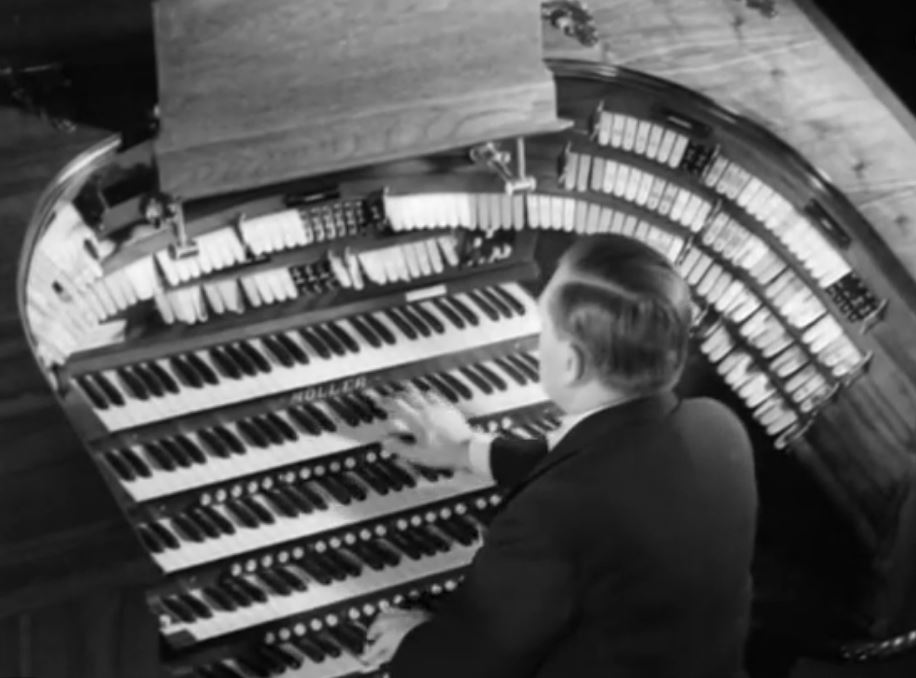
For a short time, Britain had a passionate and intense love affair with the cinema organ. Wurlitzer organs began to proliferate throughout the nation in the middle of the 1920s, occupying picture palaces that were at the time among the most opulent public areas that the majority of common people would ever visit.
Because their purpose was to support silent films rather than to be seen, the early consoles were simple, dark wood devices that were concealed in orchestra pits. All of that changed in 1929 with the introduction of talkies. The organ became the story itself since it had no more narrative to support on screen.
Consoles were outfitted in gold and cream. Organists were raised gradually and dramatically into the light using hydraulic lifts. One of the most iconic images of interwar Britain was the sight of that well-dressed figure rising from beneath the stage in the spotlight, hands already moving across the keys. The most obvious indication that it had become genuinely iconic was probably when Monty Python parodied it.
The largest Wurlitzer ever shipped to Britain was installed in 1930 for the opening of a 3,400-seat theater at the Trocadero, Elephant and Castle. Architect James Morrison created the Granada circuit’s distinctive house style in the middle of the 1930s, which is easily identifiable by its flat box-end consoles.
Reginald Dixon of Blackpool gave the Tower Ballroom Wurlitzer what became known as the “Blackpool sound” by making it truly famous through BBC radio broadcasts. These weren’t merely background pieces of furniture. They were celestial bodies.
What transpired next is what complicates and, to be honest, makes the story more fascinating. The organs within movie theaters faced a variety of outcomes, from the remarkable to the dismal, as movie theaters shrank in size and picture houses were sold off, transformed, or destroyed. A few were split up.
Some were kept in storage for years or even decades, waiting to be saved by someone with sufficient funds and enthusiasm. After Turner’s Musical Merry-go-Round, a fairground attraction, closed, the Newcastle Paramount organ was placed back in storage and is currently waiting for a new home. That trajectory has a certain indignity, but it also has an odd kind of patience.
Others landed in unexpectedly suitable places. The Paramount Manchester organ was relocated to the Free Trade Hall in 1977 and stayed there until the building was turned into a hotel in 1999. It is currently still playable at Stockport Town Hall.
One of the best in Britain, the Granada Manchester Wurlitzer spent eight years in a baronial hall at Granada Studios, seven more years in storage, and finally at Folly Farm in South Wales. Eventually, the Trocadero organ ended up at the Troxy on Stepney’s Commercial Road.
In order to avoid being left out, the BBC purchased a Wurlitzer from the Empress Ballroom in Blackpool in the late 1960s and installed it at the Playhouse studios in Manchester. It was formally unveiled in November 1970, featuring performances by Dixon and others, before that studio also closed in 1986.
Perhaps no other class of musical instrument has experienced such a volatile diaspora. The organs ended up in town halls, recreation centers, private residences, seaside collections, a Devonian church, depending on who happened to care enough.
The Scottish Cinema Organ Trust runs several instruments, and the Cinema Organ Society maintains a comprehensive record, indicating that the passion needed to keep these things going hasn’t completely faded. Having enough space, money, or a structure with the proper acoustic qualities is not the same as caring enough; some organs did not survive the transition at all.
The picture houses provided these instruments with context, which their closure removed. The Wurlitzer made sense as a spectacle when it rose on a lift in front of thousands of people. It makes more sense as history, as preservation, as a form of stubbornness in a church vestibule or town hall basement.
In Beer, Devon, the original Walsall organ is still in use. It is tuned by someone. It is played by someone. That is not insignificant.