
Close Menu
Paul Corin MusicPaul Corin Music
    Facebook X (Twitter) Instagram
    Saturday, October 10
    Facebook X (Twitter) Instagram
    Paul Corin MusicPaul Corin Music
    Subscribe
    • Wurlitzer Organs
    • Magnificent Music Machines
    • News
    • Music Stars
    • Terms of Service
    • Privacy Policy
    • Disclaimer
    • About Us
    Paul Corin MusicPaul Corin Music
    Home » The Trocadero Elephant and Castle Wurlitzer: Britain’s Largest Cinema Organ Ever Installed
    Musical Instruments

    The Trocadero Elephant and Castle Wurlitzer: Britain’s Largest Cinema Organ Ever Installed

    By Alison JamesSeptember 18, 2026No Comments4 Mins Read
    Facebook Twitter Pinterest LinkedIn Tumblr Email
    Share
    Facebook Twitter LinkedIn Pinterest Email

    At the Troxy in Stepney, east London, there’s a moment when you hear something before you realize what you’re seeing. The walls appear to be breathing. A shimmering white and gold console with four rows of keys, hundreds of stops, and pedals extending in all directions can be seen when you hear a noise coming from somewhere you can’t quite place. It’s a lot to process. The largest cinema organ ever installed in Britain is the Trocadero Elephant and Castle Wurlitzer, which is also arguably the most durable instrument this nation has ever had.

    It began at the Trocadero Cinema in Elephant and Castle, South London, which opened on December 22, 1930, with a sense of civic pride. The Trocadero, which was designed by George Coles and constructed by Hyams and Gale Kinemas, had elaborate Renaissance décor and could accommodate between 3,400 and 3,500 people. Advertisements from the time of its opening referred to it as “Europe’s largest cine-variety theatre,” and the Wurlitzer, which was transported from the United States to this location, cost £15,000. It featured 21 ranks of pipes and a four-manual console. It was huge. It was unlike anything that had ever been imported into the UK, and it hasn’t really been since.
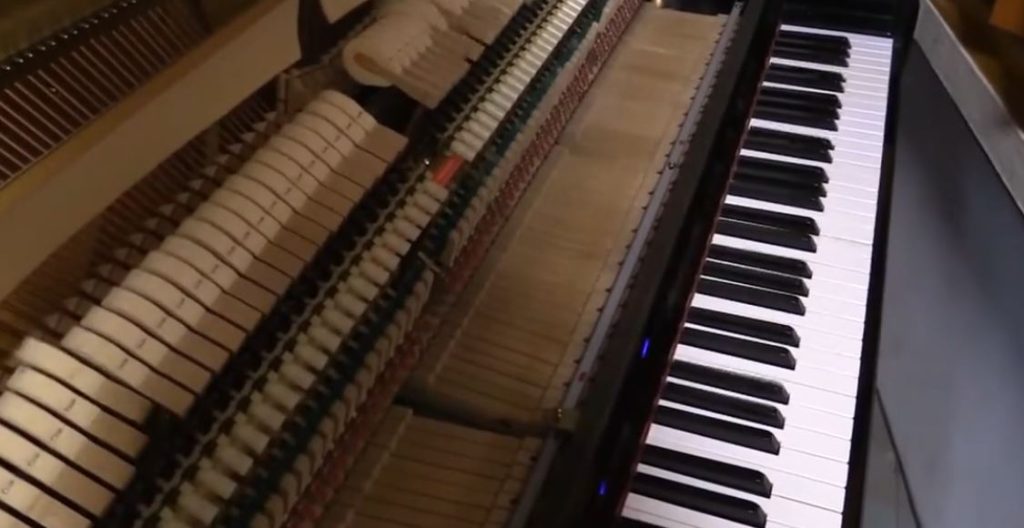
    The Trocadero Elephant And Castle Wurlitzer Britains Largest Cinema Organ Ever Installed
    The Trocadero Elephant And Castle Wurlitzer Britains Largest Cinema Organ Ever Installed

    Quentin Maclean was the organist most closely linked to the Trocadero’s heyday; his name became practically synonymous with the instrument. The person at the console greatly influenced the quality of a movie viewing experience during the silent film era. In a matter of seconds, a skilled organist could move from comedy to heartbreak to a chase sequence, influencing the audience’s emotions in addition to providing accompaniment for what was on screen. This is what Maclean did, nite after nite, in front of thousands of people.

    The organ’s life may have ended there in 1960 when the Trocadero ceased to be a movie theater. Many instruments from that era simply disappeared, either disassembled, sold for parts, or allowed to deteriorate in storage. However, the Cinema Organ Society acted swiftly, acquiring it and starting the laborious process of removal and restoration. The theater itself was demolished soon after it closed in October 1963. The only survivor was the Wurlitzer.

    It was housed in the Edric Hall at what is now London South Bank University for 25 years, and that time was not without its own little glory. To perform it, organists traveled from Australia, the United States, and the United Kingdom. It maintained its reputation. However, the space was cramped, the acoustics were never perfect, and in 2003 it was announced that the hall would be renovated. The organ needed a place to go once more.

    Before the Troxy was chosen, five more years of searching were required. The decision was appropriate in a way that seemed almost deliberate, even though it was obviously not. Built by the same architects three years after the Trocadero, the Troxy in Stepney once had its own Wurlitzer, which has since been dismantled. In the vernacular of movie chains, the two structures were sister venues. Even though neither building had intended for the Trocadero organ to be restored to the Troxy, it felt almost like a homecoming.

    It took more than four years to finish the installation and restoration, which started in January 2011. Through grants, bequests, and donations, the Cinema Organ Society was able to raise £275,000. When the instrument debuted at the Troxy in August 2015 under the title “A Nite of 1000 Pipes,” it had 1,778 pipes that could mimic almost every orchestral instrument in addition to sound effects like sleigh bells, bird whistles, and the rhythmic clip of horse hooves. According to one account, the biggest pipes are 16 feet tall and have a foghorn-like sound. The tiniest ones are hardly thicker than a pencil.

    Beyond its sheer size, this instrument is unique because of the way its sound fills the space. The pipes are hidden behind elaborate panels on either side of the Troxy’s stage, producing what organ experts refer to as a true stereo effect. It’s really hard to tell where the sound is coming from when you’re standing in the auditorium. It appears to originate from the structure itself.

    An instrument that has withstood demolition, relocation, a university basement, decades of uncertainty, and is still valued at £275,000 after five years of volunteer labor and restoration costs is truly remarkable. It implies that it was more than just a musical curiosity to those who were interested in it. They observed a fragment of the cultural fabric of Britain that had not yet been fully acknowledged.

    Castle Wurlitzer Trocadero Elephant
    Share. Facebook Twitter Pinterest LinkedIn Tumblr Email
    Alison James
    • Website

    Alison James writes about the history of mechanical music in Britain, including polyphons, Wurlitzer theater organs, fairground organs, and the strange collections that kept them in operation. She has traveled throughout the South West for years, visiting museums, village halls, and restoration workshops. She is especially drawn to those who save instruments that no one else wanted. She discusses the site's history, including the organs, the movie theaters for which they were constructed, and the lengthy history of British music prior to the invention of charts.

    Related Posts

    The Paper That Played Rachmaninov – What Piano Rolls Are Actually Made Of

    October 7, 2026

    The Difference Between a Pianola, a Player Piano, and a Reproducing Piano

    October 6, 2026

    What Is an Ampico Piano Roll and How Did It Capture a Pianist’s Exact Touch?

    October 5, 2026

    Comments are closed.

    Music and History

    How to Restore a Player Piano – What It Takes, What It Costs, and What Can Go Wrong

    By Karl Shane KarlOctober 7, 20260

    A player piano that hasn’t moved in decades has an almost eerie quality. The roll…

    The Paper That Played Rachmaninov – What Piano Rolls Are Actually Made Of

    October 7, 2026

    The Difference Between a Pianola, a Player Piano, and a Reproducing Piano

    October 6, 2026

    How Player Piano Rolls Were Made – The Factory Process Nobody Talks About

    October 6, 2026

    Rachmaninov on Paper – The Piano Rolls That Preserved a Legend’s Hands

    October 5, 2026

    What Is an Ampico Piano Roll and How Did It Capture a Pianist’s Exact Touch?

    October 5, 2026

    Surviving Wurlitzer Organs You Can Still Hear Live in the UK Today

    September 29, 2026

    The Compton Organ vs the Wurlitzer – Britain’s Two Great Cinema Organ Rivals

    September 29, 2026

    Silent Films and the Organ – How Cinema Musicians Became Stars Before Sound

    September 29, 2026

    693 Organ Pipes – Inside the Mechanical Marvel That Is a Wurlitzer Theatre Organ

    September 28, 2026

    The BBC Theatre Organ – From Blackpool’s Empress Ballroom to the BBC Playhouse Manchester

    September 28, 2026

    How Cinema Organs Were Shipped From America to Britain in the 1920s

    September 28, 2026

    What Happened to Britain’s Cinema Organs When the Picture Houses Closed?

    September 22, 2026

    Reginald Dixon and the Tower Ballroom Blackpool: How One Organist Created the Blackpool Sound

    September 22, 2026

    The Regent Cinema Brighton’s Wurlitzer Organ: Where Is Opus 2046 Now?

    September 18, 2026

    The Trocadero Elephant and Castle Wurlitzer: Britain’s Largest Cinema Organ Ever Installed

    September 18, 2026

    Paul Corin Music is an independent music blog rooted in the rich heritage of British musical history. Born from the legacy of Paul Corin's Magnificent Music Machines — the world-famous mechanical music museum at Lametton Mill, St Keyne, Cornwall — this site covers everything from Wurlitzer theatre organs and Victorian music halls to contemporary pop stars and today's biggest music news.

    Useful Links
    • About Us
    • Contact Us
    • Disclaimer
    • Home
    • Privacy Policy
    • Terms of Service

    From the Mill

    Paul Corin's Magnificent Music Machines
    Lametton Mill, St Keyne, Cornwall
    1967 – 2012

    Read the mechanical music archive
    Facebook X (Twitter) Instagram Pinterest
    • Home
    • Wurlitzer Organs
    • Regent Cinema Brighton
    • Musical Heritage Attraction
    • Musical Instruments
    • Magnificent Music Machines
    • Entertainment
    • Music Stars
    © 2026 ThemeSphere. Designed by ThemeSphere.

    Type above and press Enter to search. Press Esc to cancel.