
If you’re fortunate enough to find a surviving British picture palace from the 1930s, you can’t help but imagine the sound that once filled those opulent auditoriums. Something much more dynamic than a movie score played over speakers.
The sound of a theater organ fills two thousand seats as it rises from a pit or glides on a lift, its pipes concealed somewhere in the walls. A Wurlitzer or a Compton provided that sound for a large portion of Britain’s cinematic heyday; the debate over which was better has never really been resolved.
There was a lot of American swagger when the Wurlitzer arrived. For most people who had never given either much thought, it was the well-known name, the instrument that was synonymous with the term “theater organ”. A Wurlitzer was installed by the Paramount Corporation when it constructed its flagship theater on Regent Street in London.
The same is true at its theaters in Manchester, Newcastle, and Leeds. Many owners didn’t bother trying because of the American instrument’s prestige, which was hard to dispute. The wooden Tibia Clausa, the rank of pipes that gave theater organs much of their unique, breathy character, contributed to the Wurlitzer’s unique warmth.
John Compton was creating something truly unique while working from a factory and eventually relocating to Willesden. His Tibia was made of metal rather than wood, which resulted in a distinctly different tone that was brighter and, some would argue, more precise, though others found it less immediately alluring.
Depending on what you were hoping for from a Saturday night at the photos, that may or may not be a drawback. Compton was not in the imitation business; in 1901, he had declined an offer from Robert Hope-Jones himself. He had his own theories about the capabilities of an organ.
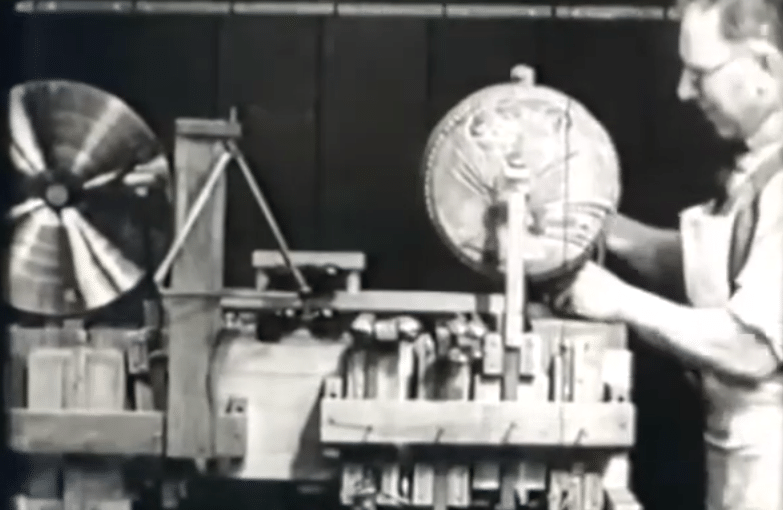
It’s worth pondering how inventive those concepts were. The Solo Cello, which debuted in 1933, was a real vibrating string that was played by a revolving resin wheel. It was essentially an electromechanical bowing mechanism that foreshadowed the logic of the electric guitar pickup in an odd way. The majority of organists were not fond of it.
After twenty instruments, it was quietly discontinued due to its fiddliness and unreliability. However, Compton’s temperament is revealed by the fact that he was attempting anything of the sort at all. Then, in 1932, technician Leslie Bourn created the Melotone, which used waveforms etched in a conductive plate to produce sounds. Between 1935 and 1939, it was installed in 74 organs. It was an early example of electronic synthesis concealed inside a pipe instrument. That was not what the Wurlitzer was doing.
The rivalry reached its peak in 1937 when Compton was hired by the Paramount Corporation, which had previously favored Wurlitzers in its British theaters, to construct instruments for four brand-new super theaters in Liverpool, Glasgow, Birmingham, and London. According to Compton, the goal was to create organs that could compete with the Wurlitzer on their own terms.
What a fantastic commission. It implies that even Wurlitzer’s most devoted institutional client began to question whether the British builder had anything to offer by the late 1930s. In response, Compton created the Paramount Style Console especially for the agreement.
By then, the company had already finished the five-manual Compton at the Odeon Leicester Square, a theater organ of a scale and ambition that no Wurlitzer installation in Britain could match. It is still regarded as one of the most remarkable instruments ever installed in a British theater. Five guides. In a movie theater. It remains.
It remains to be seen if public affection for the Compton ever really surpassed that of the Wurlitzer. Many people found it easier to fall in love with the sound of the American organ when they first heard it. However, Compton constructed 261 theater organs throughout Britain, created mechanisms that foresaw technologies no one had a name for, and created instruments that are still in use today. I think that’s the product of more than a runner-up.
FAQs
Q: What made the Wurlitzer’s sound distinctive?
A: Its wooden Tibia Clausa pipes gave it a uniquely warm, breathy character.
Q: How did Compton’s Tibia differ from the Wurlitzer’s?
A: Metal construction produced a brighter, more precise tone than the Wurlitzer’s wooden pipes.
Q: What was the Melotone?
A: An early electronic synthesizer hidden inside a pipe organ, installed in 74 instruments.
Q: How did the 1937 Paramount commission signal a shift?
A: Even Wurlitzer’s most loyal British client began commissioning Compton organs instead.
Q: How many theater organs did Compton build in Britain?
A: 261 — more than enough to establish him as far more than a runner-up.