
On July 27, 1921, Brighton’s Regent Cinema on Queen’s Road opened, and it wasn’t modest about what it had to offer. This was more than just a picture house; it included an orchestra pit, a dance hall, a café, and a restaurant. The structure presented itself as a destination rather than merely a venue. The Regent was a perfect fit for Brighton’s understanding of leisure in the early 1920s.
A reputable British theater organ, the Hill, Norman, and Beard organ, was the first instrument installed there. It seemed fitting for a movie theater with such aspirations. It carried a full auditorium through the quiet of the silent movies, filling the room with something between a small orchestra and a one-man band, which was what theater organs of the time were intended to do.
Anyone who has watched a silent film and listened to a good theater organist knows that the music is the emotional framework of the entire experience, not just background.
The movie theater was then damaged by a fire in January 1929. It’s the kind of incident that might have put an end to things, but instead it appears to have sparked a kind of rebirth. When the Regent reopened on July 1, 1929, it was outfitted with a brand-new 2-manual, 9-rank Wurlitzer organ, an American-made device that had by then established itself as the standard for British theater sound.
After arriving in the UK for the first time in 1924, the Wurlitzer began to define British cinema culture in the late 1920s. When Brighton acquired one in 1929, the Regent was firmly in line with what a serious movie theater was doing at the time.
Although both were important, the Wurlitzer’s size and flexibility weren’t the only things that set it apart from a typical pipe organ. It was created especially for theaters; it is expressive, quick to react, and able to simulate whole orchestral sections from a single console. One image that stuck in people’s minds was of a well-dressed organist rising through the floor on a hydraulic lift, hands and feet moving across pedals and manuals. Years later, Monty Python made fun of it, demonstrating how deeply ingrained the theater organist had become in British culture.
Throughout its heyday, the cinema benefited from the Regent’s Wurlitzer. By the 1960s, however, the organ’s function had long since changed from necessity to nostalgia due to the talkies. The Wurlitzer was taken out of the structure in 1962. The movie theater itself continued to operate for a while longer, changing into a bingo hall in 1967 before showing its last movie in 1973. One of dozens of opulent British super-cinemas that failed to survive the television era undamaged, the building was eventually demolished.
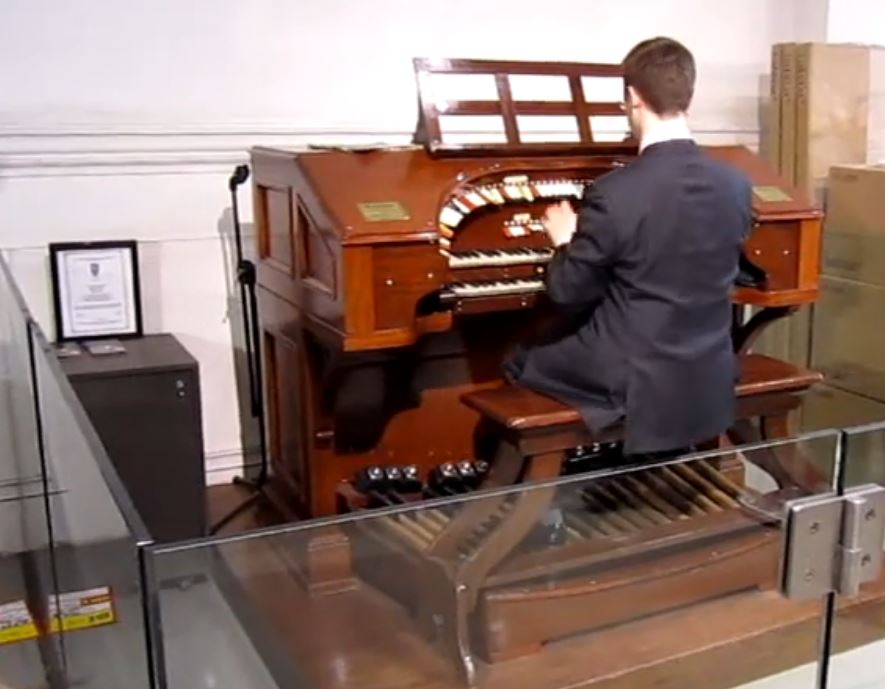
The building did not fare as well as the organ. Following its removal, the Brighton Regent Wurlitzer was placed in the Magnificent Music Machines collection in Cornwall, where it has remained ever since. Cornwall is far from the seaside vibrancy of Brighton’s Queen’s Road, but the instrument is intact and probably still playable, which is more than can be said for the structure that once held it. In a way, it’s a fitting sort of afterlife.
That result has some merit. The actual Regent Cinema has vanished. The orchestra pit, the café, and the dance hall were all destroyed. However, what survived was the Wurlitzer, the part of the structure that was easiest to move and remove. Future generations might hear that organ in Cornwall without realizing that it once filled a Brighton theater on a summer night in 1929. The theater had just been rebuilt following a fire, and at the time, it seemed to be the pinnacle of contemporary entertainment.