
If you’ve ever been in the right place at the right time, there’s a moment when the floor starts to vibrate before you hear anything at all. Then the sound rises from some hidden lung in the walls, full, warm, a little overwhelming. That’s a Wurlitzer theater organ performing its intended function; some of them continue to do so in defiance of all reasonable expectations.
It’s worth taking a moment to consider how these instruments came to be in the UK. On December 1, 1924, the first Wurlitzer to be shipped here, a small six-rank device intended for the Picture House in Walsall, Staffordshire, departed for Southampton Docks. It opened there on January 26, 1925.
The same organ is currently in use inside a congregational church in Beer, Devon, following a period of private ownership in Sedgley during the 1950s. It feels almost novelistic to travel from a picture house in Staffordshire to a chapel in Devon. Perhaps no one who heard it in Walsall in 1925 could have predicted its future.
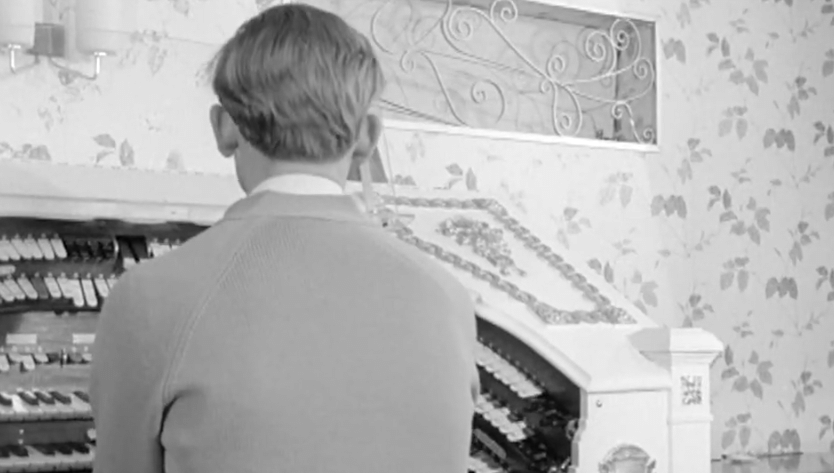
A few months later, on April 6, 1925, the Palace Cinema in Tottenham, North London, hosted the second Wurlitzer to open in Britain. Since then, Rye College in East Sussex has taken up residence with that instrument. In England, there are two ancient organs that are still alive and quietly sitting in corners that most people drive by without realizing.
Not all of the surviving Wurlitzers ended up in such a modest location. Perhaps the most emotionally charged address in British organ history is the Blackpool Tower Ballroom, located on the coast of Lancashire.
The late Reginald Dixon, who played the instrument from 1930 to 1970, defined it for decades. After it was installed in 1935, it evolved into something truly unique: a piece of popular culture. Dixon made 296 records. He outsold Frank Sinatra when he was at his best. Standing in that remarkable gilded room today gives me the impression that the organ is more than just furniture. That’s the whole idea.
When the organist began playing “Oh I Do Like to Be Beside the Seaside” at Blackpool, ten-year-old Aaron Hawthorne, who was reluctantly pulled along by his parents, saw the Wurlitzer console rise through the stage floor. That day, he was in the ballroom most of the time. Then returned the following day as well.
At the age of 25, he won the American Theater Organ Society’s Young Theater Organist of the Year award in 2019 while traveling the nation performing improvised scores for silent films, such as “Nosferatu”, on surviving Wurlitzers. It’s a surprisingly simple path from that childhood afternoon to a national tour.
Radio played a part in keeping these organs alive in Britain when they were mass-scraped in America, where over 7,000 were installed before being abandoned when talkies arrived. Through the BBC’s frequent broadcasting of Wurlitzer performances, people like Dixon gained widespread recognition.
In the late 1960s, the BBC even purchased a theater organ from the Empress Ballroom in Blackpool and installed it at the BBC Playhouse studios in Manchester, where it continued to broadcast until 1986. Long after the movies had moved on, the organs remained culturally relevant thanks to a devoted listening public that had been developed over decades of Sunday evening radio.
One of Scotland’s surviving instruments is run by the Scottish Cinema Organ Trust and is located in Pollokshaws on Glasgow’s south side. As a teenager, Hawthorne, who would go on to become Glasgow Cathedral’s first organ scholar, touched a Wurlitzer console for the first time. He remembers that it had the recognizable Wurlitzer logo and an elaborate glass surround that was illuminated. He said, “I was just hypnotized by it”. It remains. It is still playable. Presumably still hypnotizing people.
Looking across the landscape of surviving instruments, one is struck by how dispersed and quietly determined their preservation has been. Town halls, concert halls, ballrooms, a Devon church, a college in East Sussex. No major national initiative.
Organists, custodians, trusts enthusiasts made several individual choices to continue something that had every reason to cease. For those who are interested in finding British cinema organs, the Cinema Organ Society keeps a comprehensive list.
The irony that these instruments, which were intended to take the place of a live orchestra, are now the indispensable live experience itself is difficult to ignore. A recording won’t give you the same experience. The organ is a component of the structure that trembles. That’s physics, not metaphor; it’s worth listening to while there are still rooms that allow it to occur.
FAQs
1. When did the first Wurlitzer organ arrive in the UK?
It arrived in December 1924, opening at Walsall’s Picture House in January 1925.
2. Where is the first Wurlitzer shipped to the UK now?
It lives in a congregational church in Beer, Devon.
3. Who made the Blackpool Tower Ballroom Wurlitzer famous?
Reginald Dixon played it from 1930 to 1970, outselling even Frank Sinatra.
4. Why did British Wurlitzers survive while American ones were scrapped?
BBC radio broadcasts kept them culturally relevant long after cinema talkies arrived.
5. Where can I find a list of surviving UK cinema organs?
The Cinema Organ Society maintains a comprehensive registry of British instruments.