
A piece of paper making music has a subtly amazing quality. It’s not quite magic, but it’s close enough that most people never consider how those rolls were made. It makes sense to assume that a pianist sat down and performed flawlessly in order for the music to be recorded. For the most part, that assumption is incorrect.
Around 1877, player piano rolls were first produced commercially in Cambridgeport, Massachusetts, close to Boston, in a workshop that was leased from the Mason & Hamlin organ factory. The initial employees were skilled reed organ action builders who had a deep understanding of mechanical music.
You can practically picture it: a small team marking up paper with careful, deliberate hands in a corner of a factory floor, the smell of sawdust and machine oil. It wasn’t glamorous. It was a trade.
For many years, the most popular approach had nothing to do with recording a live performance. Musical editors would manually mark out perforations, note by note, onto master rolls known as stencils. They read sheet music the same way a typesetter reads copy.
In order to produce copies in large quantities, those stencils were subsequently fed into perforating machines. Workers in Meriden, Connecticut, are depicted in the first Aeolian Company catalog photos from 1893 sitting at long tables and performing this task precisely: arranging music for 46-note organ rolls, punching stencils, then spooling the final product. It appears more like a printing house than a recording studio. Since that’s basically what it was.
The equipment changed over time. In order to cover the entire keyboard, the range of notes increased from 14 to 20, then 31, 46, 58 notes for organs, finally 65 and 88 notes for pianos. The fundamental reasoning remained the same: a human editor deciphered the sheet music, made decisions about expression and timing recorded those choices on paper.
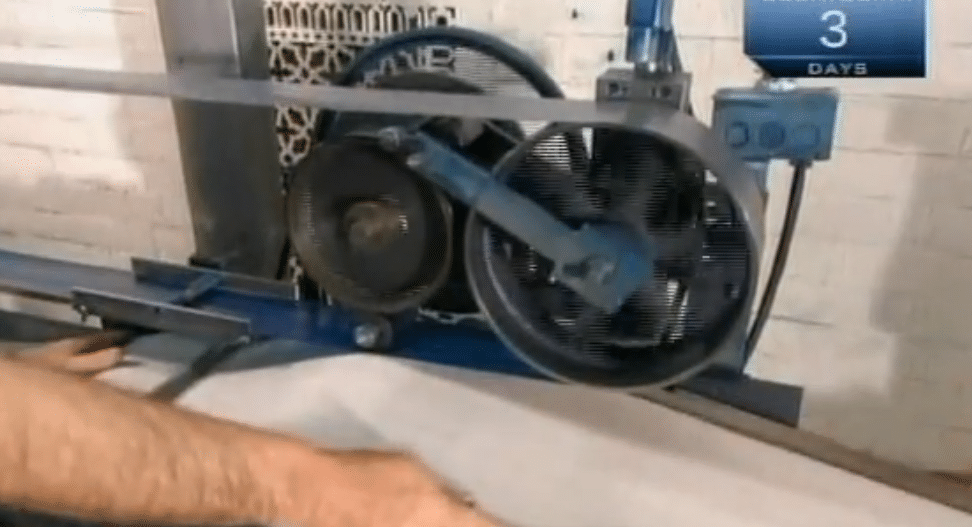
Belt-driven machinery operated in rooms filled with oil and ink, and the rhythmic thump of punching equipment echoed inside factories such as the Universal Music Company’s plant in Hayes, Middlesex, a few miles from what is now Heathrow Airport. One room was occupied by musical editors, while another was used by inexperienced punch operators. There was a clear division of labor.
In the same way that a singer lays down a vocal track in a studio, there are still those who maintain that famous pianists “recorded” their performances onto rolls. That is not as clear as the historical record.
Beginning in the 1890s, a number of recording devices were created that used rubber tubes or electrical contacts to link a piano’s keys to marking machines. The most well-known and truly advanced system for capturing dynamics and touch is likely Welte & Sons’ Mignon system, which was first used in 1904.
On February 9, 1906, Arthur Nikisch was photographed at the recording cabinet. It’s an amazing picture of the pianist, with the wires and Karl Bockisch at the controls. It appears to be serious and scientific, which it was.
Even the most advanced recording systems had flaws. The length and pitch of the markings were frequently off. Editors were still required to make corrections afterward; corrections have a way of subtly turning into arrangements.
L. Douglas Henderson spent years arguing that the production of piano rolls is essentially an arranged medium. Henderson worked for a short time at the QRS factory in the Bronx before starting his own roll company, Artcraft.
The difference is more important than it might seem. There are rolls that have more notes than a person could physically play at once. Given that the original recordings were frequently too faulty to be a solid basis, the conventional theory that pianists “overdubbed” by playing over their original performance doesn’t hold up well under close examination.
Henderson takes a straightforward stance: the rolls are arrangements. They are expert, frequently lovely arrangements. His skepticism has a different weight than most because he was there, inside the factory system.
The fact that this process is more like other industrial-era publishing than it is like creating music is subtly fascinating. Some roll libraries, such as the Aeolian Company’s operation in Madrid circa 1918, arranged and disseminated music in the same manner as book publishers, with an estimated 100,000 titles. Rolls were checked out, given back cataloged.
It appears that the Aeolian Company operated under the belief that rolls were the means to an end and that instruments were the profit center. Even now, this business logic is well-known.
The player piano roll was never just a musical instrument; it was never just a recording device. It was more bizarre and fascinating than a mechanical translation of music, created in factories by editors who made hundreds of tiny choices that no one ever gave credit for, on oil-smelling machines that punched steel. It’s important to know that.
FAQs
1. Where were the first player piano rolls commercially produced?
They were made in Cambridgeport, Massachusetts, in a leased Mason & Hamlin factory space.
2. Did famous pianists actually record their performances onto piano rolls?
Mostly no — human editors manually transcribed sheet music, note by note, onto stencils.
3. How were piano rolls mass-produced in factories?
Stencils were fed into perforating machines operated by workers at long production tables.
4. What was the Welte Mignon system?
It was the most advanced system for mechanically capturing a pianist’s dynamics and touch.
5. Why does L. Douglas Henderson call piano rolls “arrangements” rather than recordings?
Some rolls contain more notes than any human could physically play simultaneously.