
A crate containing what would turn out to be a tiny but significant piece of British musical history arrived at Southampton Docks on a chilly December day in 1924. The Wurlitzer Opus 956, a small, two-manual, six-rank Style-D pipe organ, was constructed at the company’s North Tonawanda, New York, factory and transported across the Atlantic to the Picture House in Walsall, Staffordshire. It wasn’t a big show. A provincial theater eager to add something unique to its silent film schedule made the sensible purchase. Nevertheless, this instrument is still in use a century later.
Even those who were only present for the movie must have felt the significance of that January 26, 1925, opening night. In what was a true first for the nation—London wouldn’t get its own Wurlitzer theater organ for another three months—organist Jack Courtnay performed live accompaniment to the British silent adventure film Claude Duval. Even though most people at the time probably didn’t fully comprehend what they were witnessing, it is a source of pride for a mid-sized Midlands town to claim that distinction ahead of the capital.
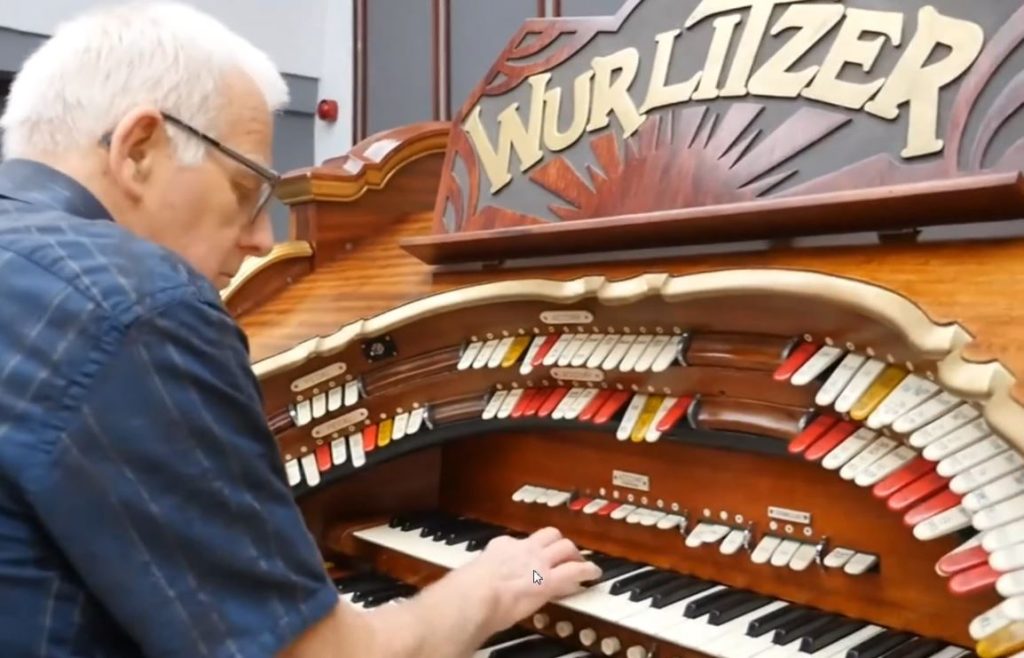
Throughout some challenging years, the organ faithfully served the Picture House. Wilfred Gregory, a resident organist, is said to have used the Wurlitzer as a kind of community anchor during World War II, performing for audiences who were dealing with the anxieties of the conflict. Although it’s a minor detail that is easily missed, it illustrates how important these instruments were to daily life in ways that have since mostly vanished. There was more to a cinema organ than just amusement. For a short while, the entire community could unite around this shared emotional experience.
By 1955, the organ was no longer needed in theaters because movies were now coming with their own soundtracks. Allan Hickling, a local council member and organ enthusiast, purchased it and installed it in his Sedgley home, Dormston House. It appears that the instrument had a fairly active private life for a few years, performed by “many notable organists of the day,” according to one account, though the details of those organists’ identities and performances have been lost to time. The Walsall Wurlitzer moved on again after Hickling finally decided he wanted something with greater range.
The organ was bought by Arthur Thorn of Beer, East Devon, in 1957, and it has been in the village’s Congregational Church on Fore Street ever since. Upon arrival, a few changes were made: the second-touch mechanisms, novelty effects, and percussion section were eliminated because they weren’t appropriate for a church. Even though there is something a little depressing about a theater organ losing its more theatrical characteristics, you can see the logic.
The comedic moments and chase scenes were no longer emphasized by the toy counter and drum effects. What was left was a more subdued version of the original Wurlitzer, which was still capable of producing a rich, warm, and distinctive sound.
Between the late 1980s and 2008, the organ fell into disrepair, which nearly put an end to the narrative. However, a restoration effort gained traction, and since their official founding in September 2009, the Friends of Beer Wurlitzer have raised and, according to their own account, spent “thousands upon thousands of pounds” on upgrades and repairs. Professional organists from all over the nation attend the group’s eight fundraising concerts each year; many of them travel great distances to sit at the console of Britain’s oldest surviving Wurlitzer theater organ.
It’s worth taking a moment to consider that fact. An instrument of true national significance is housed in the Congregational Church in Beer, an East Devon fishing village with a population in the low hundreds. Performances begin at 2:00 PM. Intermittent refreshments are included with admission. There’s something subtly lovely about that: tea and biscuits at halftime, the oldest Wurlitzer in Britain, held in a tiny church by the sea. That may be precisely how things ought to be.