
The back rooms of Victorian taverns used to be filled with a certain kind of noise, something between a wheeze and a roar, mechanical and oddly joyful, slightly out of tune in a way that made people want to sing along instead of wince. The self-operating marvel of the late nineteenth century, the player piano, was not limited to entertaining Britain’s working class. On Saturday nights, when the workweek had been brutal, and the wages were already half-spent, it kept things together.
Before electricity made life easier, it’s important to remember how British pubs actually sounded. In the same decades that London’s population was doubling, musicians were multiplying sevenfold to satisfy commercial demand; the concept of “popular” entertainment itself was being challenged, rebranded, and sold back to its creators. The piano made its way into public spaces and music halls. It wasn’t an accident that the music hall existed. It was a business decision; one of its main sources of income was the piano, whether it was mechanical or not.
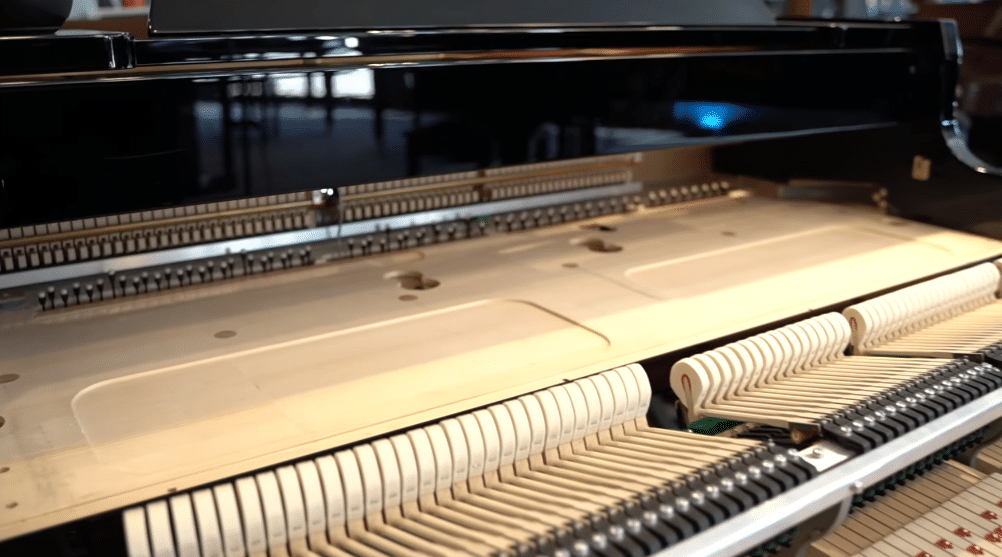
Particularly, player pianos became popular in locations that needed the atmosphere but couldn’t afford a pianist every night. A music hall chairman in Salford or a landlord in Bermondsey could just wind the mechanism, insert a paper roll of “I’m Forever Blowing Bubbles”, or let it run. That arrangement had an almost democratic quality. There was no pause in the music. It made no case for raising wages. It never missed a Monday due to a head cold.
Despite its mechanical effectiveness, the player piano’s output wasn’t detached or impersonal. Music hall culture scholarship is adamant that pub patrons in the 1890s and early 1900s were active listeners. People took part. They stamped their feet, called back to performers knew the lyrics to songs that their grandparents had sung.
Similar to how Mrs. Mills, the Beckton honky-tonk pianist who gained national recognition in the early 1960s, would later tap into the same communal energy and revive music hall sing-along traditions for television audiences decades after the original venues had closed or burned down, the player piano fueled this culture. The mechanical piano rolls of Victorian taverns and the stride piano style that Mills popularized at Abbey Road have a clear, if convoluted, connection.
Looking back, it’s truly astonishing how completely this social history chapter vanished from the annals. In the same Victorian decades, the bourgeois concert culture was consolidating power; the player piano became a kind of embarrassment, too mechanical for serious music enthusiasts and too working-class.
The growing divide between “art” and “entertainment” was observed by British nineteenth-century music scholars as something that the educated classes deliberately created. Sitting firmly on the wrong side of that rift was the player piano. It was noisy, it was in public, it smelled like beer it didn’t distinguish between trained and untrained ears.
The tale of player pianos in British pubs may actually be a tale of class anxiety disguised as artistic criticism. The tensions that made the boisterous singalong pub piano seem somewhat menacing were the same ones that prompted Victorian bourgeois reformers to refer to “rational recreation” culture as something instructive, civilizing, and morally ordered. No one with cultural aspirations wanted to claim the culture of a room full of working men yelling along to a mechanical instrument, so it was quietly excluded from the histories.
What was left, however, was the sound itself, which turned out to be truly unkillable. The upright pub piano had a slightly breathless, slightly percussion-like quality it was consistently slightly out of tune in a way that seemed deliberate rather than accidental. Because its flaws were invaluable, Abbey Road Studios is renowned for keeping a 1905 Steinway upright despite its wear and tear.
According to reports, Paul McCartney attempted to purchase it. A song about it was written by Eddie Vedder. A rock musician in the twenty-first century reaching back toward a sound that traces, however far away, to the back rooms of Victorian music halls and the player piano rolls that once filled them with noise has an almost poignant quality. The sing-along in British pubs never truly went extinct. All it did was switch up the instruments.
FAQs
1. Why did Victorian pubs use player pianos instead of live musicians?
They were cheaper — no wages, no sick days, no missed Mondays.
2. How did audiences in 1890s pubs interact with the music?
They stamped feet, sang along, and called back to the performers.
3. Why did player piano culture disappear from historical records?
Class anxiety led educated Victorians to quietly exclude working-class pub culture.
4. What gave Victorian pub pianos their distinctive sound?
A slightly breathless, percussive tone, consistently and almost deliberately out of tune.
5. How does the Victorian pub piano connect to modern music?
Abbey Road kept a worn 1905 upright that both McCartney and Eddie Vedder admired.