
Most tourists don’t see this side of Cornwall. The harbor at St. Ives and the cliffs at Land’s End are fine, really. Between the surfboard rental shops and the cream tea shops, a whole county’s worth of richer, stranger history lies in silence. These are locations shaped by prison roulette wheels, transatlantic telegraph cables, granite quarries, and wartime secrets. Perhaps the most fascinating tales in Cornwall are those that hardly made it into the travel guides.
Located in a former granite quarry close to Penryn, Via Ferrata Cornwall is easy to miss if you’re skimming a tourist pamphlet. It appears to be an adventure sport venue, which it partially is. The largest group of granite figures carved in 2,000 years was created in Palestine Quarry in 1958, which was a truly unique event.
Cornish artisans created a 20-ton monolith with the help of four men pulling a rope, a feat that hadn’t been attempted on that scale since ancient Egypt. Today, visitors can zip-line through a landscape still bearing the weight of that accomplishment while scaling the same cliff faces where those quarrymen once labored. A rediscovered wartime bunker called Mabe’s Operational Base is hidden deeper within the site, adding yet another layer of strangeness to an already complex location.
It is also easy to undervalue the story at Lappa Valley, which is close to Newquay. It makes perfect sense that families visit for the play areas and steam trains. The railroad they travel on was built in 1843 to transport tin and lead ore from the East Wheal Rose mine, making it one of Cornwall’s oldest track beds.
The “Great Hundred” beam engine, which was one of the most potent in the county at the time and spent its working life pumping floodwater from below ground, is housed in the engine house at the site’s center. It was insufficient in 1846. 39 men perished when the mine was overrun by a flash flood. There’s a memorial there now; the quiet surrounding it doesn’t quite match the joy of the nearby narrow-gauge trains. In a way, that tension is the most genuine aspect of the location.
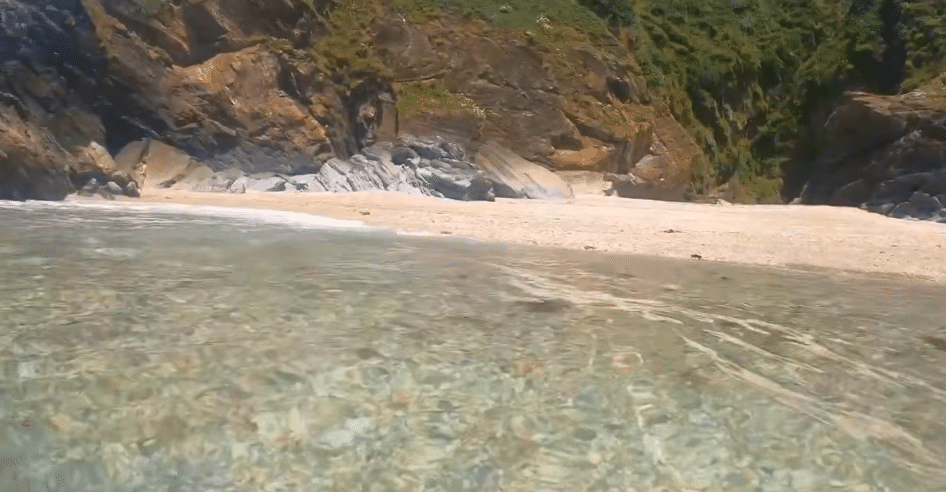
In contrast, Porthcurno makes no mention of its significance. From the beach, it appears to be just like any other lovely Cornish cove with a serene valley, crystal-clear water, the kind of place that encourages people to use the word “honestly” in conversation. Beneath this scenery is a thread of underwater cable that formerly connected Britain to India, America, and other countries, something that tourists may not be aware of.
Porthcurno was undoubtedly one of the world’s most strategically important communication hubs in the late 19th century. The PK Porthcurno museum traces the entire arc from Morse code to fiber optics and opens up the WWII tunnels that guarded the site. It’s the kind of history that causes you to look at your phone a little differently while driving home.
The most theatrical of all of them is Bodmin Jail. Most people are aware that it opened as the county jail in 1779. Few people are aware of its closure in 1927. By the 1960s, the former prison chapel had been transformed into the 99 Club, a dance hall and cabaret venue that was once Cornwall’s only casino. The cells were filled with music and the sound of roulette wheels spinning.
The striking ruins that still loom over the town were left behind after portions of the abandoned building were destroyed with dynamite in 1929. No amount of immersive museum lighting can fully explain away the strange, slightly surreal quality of Bodmin Jail due to its layers of use, which range from gallows to gaming tables. The building itself appears to have lost the plot in the most intriguing way imaginable.
The National Maritime Museum in Falmouth is situated on land that was formerly a boatyard. The museum’s design, which features sharp, shed-like shapes, purposefully pays homage to those roots. Inside, a replica pilchard cellar and a fisherman’s loft transport guests into trades that disappeared so silently that most people couldn’t tell you when they stopped.
Tucked away between the white conical tips close to St Austell, Wheal Martyn’s china clay industry tells a similarly neglected tale of waterwheels and settling tanks, an irreplaceable collection of operational Victorian machinery that Historic England has named a Scheduled Ancient Monument.
Cornwall does a good job of marketing its weather, pasties, and coastline. That’s reasonable enough. It’s important to understand that there is a county shaped by underwater cables, wartime bunkers, roulette wheels in former prison chapels just behind the apparent version. If not always clearly marked, the majority of it is. All you need to do is look.
FAQs
1. What makes Via Ferrata Cornwall historically significant beyond its adventure activities?
A 20-ton monolith was carved there in 1958 — the first of its scale in millennia.
2. What tragedy is commemorated at Lappa Valley?
A flash flood in 1846 killed 39 miners at the East Wheal Rose mine.
3. Why was the Porthcurno beach area strategically vital in the 19th century?
Underwater cables running from the cove connected Britain to India, America, and other nations.
4. What unexpected use did Bodmin Jail serve after closing in 1927?
Its chapel became a casino and cabaret venue called the 99 Club.
5. What does the PK Porthcurno museum offer visitors?
It traces the history and opens WWII tunnels that once protected the cable station.