
A specific type of performance art is no longer practiced, at least not in any significant way. The stage impersonator who could transform himself into a literary character, entirely through posture, voice, and timing, working a gaslit theater without microphone or safety net.
One of the last true masters of it was Bransby Williams. The Dickens characters he popularized on Victorian and Edwardian stages served as a generation of working-class Londoners’ first real introduction to Uriah Heep and Bill Sikes, the elderly man from “The Old Curiosity Shop”. Not on a page. Not in front of a screen. Right there in the stalls, in the flesh.
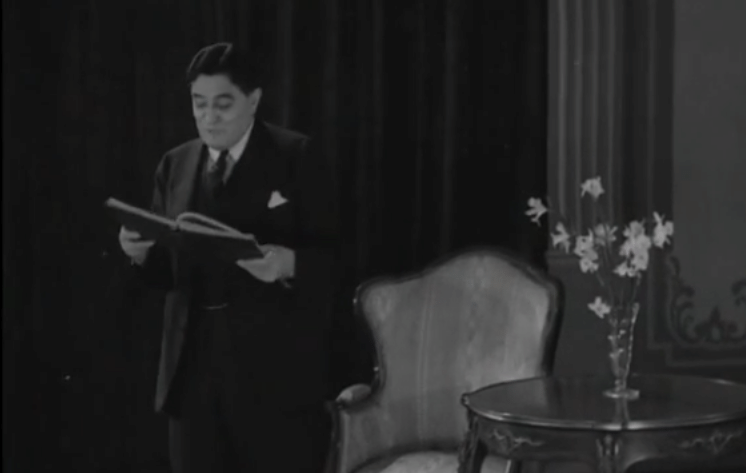
The majority of people who have heard of Williams at all might only be familiar with him from a footnote a footnote about Charlie Chaplin, of all things. In his autobiography, which was unexpectedly released in 1964 considering the caliber of its prose, Chaplin described how he was inspired by something he couldn’t quite put his finger on while watching Williams portray these Dickens characters as a child.
He wrote that he was curious about what “these sepia Dickens characters that moved in such a strange Cruickshankian world” contained. You can learn something from that phrase alone. A stage actor had given the characters in “Oliver Twist” a sense of realism, urgency, even mythology, so a boy who could hardly read was reaching for it.
The detail that is often overlooked is what Chaplin did next. He started mimicking Dickens as Bransby Williams did. In a sort of multi-layered mimicry, the boy absorbed the actor, absorbed the novelist; it was in this imitation of an imitation that he was recognized, asked to perform, and sent on a journey that ultimately led to global genius. It’s difficult not to find it amazing that one of the most well-known actors in film got his start in a Victorian stage play about a hideous clerk with wet hands.
Even at the time, Williams was employed in a tradition that seemed to be disappearing. Character recitation performers who could assume the role of a well-known literary character and captivate an audience for twenty minutes without the use of plot or spectacle props were always welcome in Victorian music halls.
Dickens himself had written his characters for both performance and reading, so they were especially well suited for this. After touring his own readings of Nancy’s murder with an almost terrifying intensity, he politely asked how many women in the audience had passed out. Dickens had always blurred the distinction between novelist and actor.
Perhaps intuitively, Williams realized that Dickens’s characters are as much a part of their bodies as their words. His writhing is Uriah Heep. His violence, coiled and then unleashed, is Sikes. His shuffling, his half-sentences, the subtle scent of accumulated rather than chosen items all reveal the old curiosity shop dealer.
These aren’t psychological portraits in the contemporary sense; rather, they’re more akin to music, with recurrent themes that always land in the same spot. These notes could be played by a talented stage imitator. Williams performed them so well that a young child in a London theater could tell that something extraordinary was hidden in those books without even having to read a word.
Looking back, it seems like this specific art form the literary impersonator, the character recitalist was always going to be squeezed out. With the advent of cinema, you could see real films of Dickens instead of just one man’s interpretation of them. Radio came next. It began to seem unnecessary for the performer to act as a living bridge between the audience and the text.
Depending on what you believe the bridge was truly doing, that may or may not be a loss. It wasn’t an illustration. It wasn’t precisely translation. Telling the audience that these characters were accessible to them and that they didn’t require education, money, or free time to possess them was more akin to granting permission.
Williams, those late Victorian London stage nights, a young child who observed and then imitated what he saw, are the origins of that lineage. It’s an odd and underappreciated thread in the history of how culture is passed down through generations, with the source becoming richer rather than thinner with each retelling.
Bransby Williams is worthy of more than a footnote. Perhaps a brief chapter, but one that is genuine, is what he deserves. Not because he was Chaplin or Dickens, but rather because he was the essential link between them, a living example of how great writing can endure being inhabited by someone else.
FAQs
1. Who was Bransby Williams?
A Victorian-Edwardian stage actor who impersonated Dickens characters in music halls.
2. How did Bransby Williams influence Charlie Chaplin?
Chaplin watched Williams perform as a child and began mimicking the Dickens characters himself.
3. What made Dickens’s characters well-suited for stage performance?
Dickens wrote them for both reading and performance, with physical, repeatable traits like music.
4. Why did the literary impersonator art form disappear?
Cinema and radio made live character recitals seem unnecessary as cultural bridges.
5. What was the deeper role of the character recitalist beyond entertainment?
He permitted working-class audiences to claim great literature as their own.