
A certain type of performer transforms a space rather than merely filling it. That kind of person was Marie Lloyd. Born Matilda Alice Victoria Wood in February 1870 in Hoxton, London, she was raised as the oldest of nine children in a small but diligent home. Her father worked as a waiter at the Eagle Tavern, and her mother was a dressmaker.
It seems that her father recognized early on that his daughter was unique. By the time she was a teenager, she was working two jobs making baby boots and curling feathers for hats while singing for free at that same tavern. When a foreman saw her dancing on the tables, she was fired from the latter. That night, she told her parents she wanted to be on stage all the time when she got home. That kind of logic is difficult to refute.
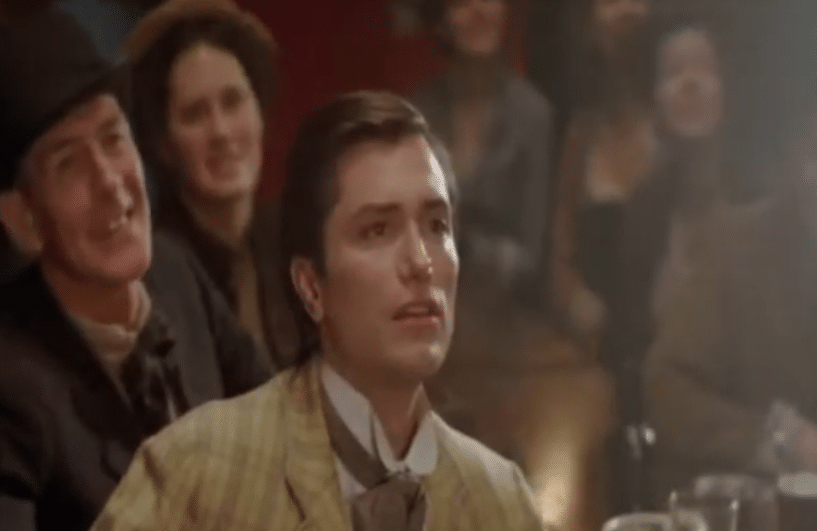
On May 9, 1885, at the age of fifteen, she made her professional solo debut under the stage name Matilda Wood. She performed songs that she had stolen without permission; at least one original artist threatened to sue her. She didn’t let any of it stop her.
By 1886, she had a new agent, a new name called Marie, which Lloyd took from a newspaper due to its “slightly French” sound a wink that would go on to become one of the most well-known gestures in British entertainment. It wasn’t an accidental wink. It was an indication that “you and I both know what I mean; we’re not going to say it out loud,” a private joke between the performer and the audience. Victorian censors were unsure of how to handle that.
And that was kind of the point. The gap between what was said and what was intended was where Lloyd’s humor resided. Songs like “She’d Never had her Ticket Punched Before”, which purportedly told the story of a young girl’s first train ride, were so deeply layered in double meaning that audiences erupted in applause while the official press attempted to justify their disgust.
By the middle of the 1890s, she was frequently brought before theater censors on charges of performing risqué material. According to reports, she responded by performing the same songs with heightened innocence, which in some ways made them more suggestive. It remains one of the most refined examples of artistic defiance in the history of theater.
By the end of 1886, she was making £100 a week and performing in multiple halls every night, a schedule that still seems harsh today. Audiences in the back row could sense her improvisational confidence as her ad lib instincts became more refined. When she made an appearance at the esteemed Oxford Music Hall in 1891, the audience cheered her on so loudly that it was impossible to hear the act that followed.
She was dubbed “the favorite of the hour” by the Era. Reading accounts from that era gives the impression that audiences were witnessing someone who was unapologetically and defiantly herself, which in Victorian England was a form of political act in and of itself.
By most accounts, her private life was far less successful. She had three marriages, two divorces, and two court appearances where she testified against husbands who had mistreated her physically. Percy Courtenay, her first husband and a ticket tout, once threatened to cut her throat after removing a decorative sword from the wall of her dressing room on Drury Lane.
She went straight to the police after escaping with only minor bruises. She continued to perform. It’s important to consider how she persevered through the kind of domestic upheaval that would have ended most careers, continuing to sell out theaters and hone her craft.
Between 1894 and 1900, she traveled throughout America, France, Australia, and Belgium. In New York, she allegedly achieved “the biggest hit ever known” at Koster and Bial’s Music Hall. Along with other performers, she protested for better wages and working conditions outside theaters in 1907 during the music hall war. She visited hospitals and industrial facilities to boost morale during World War I. The woman who censors had denounced was now hailed as a patriot. She was as complex as ever.
“My Old Man (Said Follow the Van)” was a late-career hit for her; by 1919, it went on to become one of the songs most people associate with her name. By then, alcohol had taken a toll on her health, making it more difficult to conceal her episodes of illness. Her last performance took place at London’s Alhambra Theater in October of 1922. On stage, she became ill. At the age of fifty-two, she passed away four days later.
It’s difficult to overestimate how much she invented over a century later. Pop stars and comedians still look to the knowing audience relationship, the content that works on several levels at once, the performer who seems to be confiding in you directly even from the back of a large theater.
She might not have considered any of it to be inventive. It’s likely that she was simply acting instinctively when she danced on the tables until someone told her to stop, at which point she did it again, a little more purposefully, to make a point.
FAQs
1. Who was Marie Lloyd?
A Victorian music hall performer born in Hoxton, London, in 1870.
2. How did she handle censorship of her material?
She performed the same songs more innocently, making them even more suggestive.
3. What made her stage persona distinctive?
Her knowing wink created a private joke shared directly with the audience.
4. What was her personal life like?
She endured three marriages, two divorces, and physical abuse from husbands.
5. When and how did her career end?
She collapsed on stage in October 1922 and died four days later.