
The Victorian parlor piano has an almost theatrical quality. It sat in drawing rooms from Mayfair to Manchester, from mill owners’ townhomes to the small terraced homes of clerks who could hardly afford their rent. It had ivory keys, lacquered legs a cabinet so heavy it required four men to move. It’s difficult to ignore how peculiar it is that one instrument has become so deeply ingrained in a whole society not just as music, but also as meaning.
In a way, the tale of how Britain fell in love with the piano during the Victorian era is a tale of a nation attempting to discover its identity. The population was doubling in just one generation by the 1870s. A new bourgeoisie with money they had not inherited, status they could not yet prove a desperate need to show refinement in a world where everyone was watching emerged somewhere amid the noise and movement of the expanding cities. All three issues were simultaneously addressed by the piano.
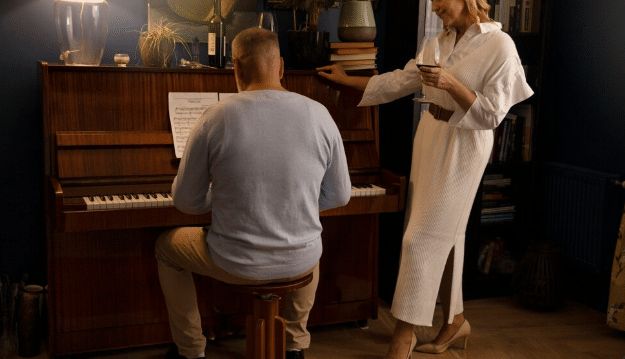
It was more than just music. The piano represented an odd Victorian paradox, as one historian noted in a now-famous study: the music played on it was prized because it seemed to transcend the material world completely, while the piano’s physical size and cost fetishized material wealth. The Victorian middle class in miniature was that conflict between flaunting oneself and seeming to transcend the need to do so. Whether people were more attached to the instrument or what owning it said about them is still up for debate. Maybe both.
The price collapse was most beneficial. In the middle of the 1880s, pianos “for the million” were being advertized for about ten guineas. Working-class families were able to afford even those prices thanks to hire purchase schemes, which were a relatively new concept at the time.
The railroads transported instruments across the nation with surprising speed; piano manufacturing was concentrated in London. The sixpenny lesson, which provided the aspirational families of Liverpool, Leeds, and Birmingham with access to something that had previously only been available to the aristocracy, followed closely behind. By the end of the century, there were pianos in houses with very few chairs.
The term “amateur” also changed as the instrument gained popularity. Prior to the middle of the 20th century, the aristocracy’s salons, quartet evenings, and performances that blurred the boundaries between host and performer dominated private music-making in Britain.
Amateurs quietly withdrew from public stages as London’s professional concert scene became more expensive and refined. That retreat was absorbed by the piano. It developed into a place where middle-class musicians could create music in private, at home, safely without being judged by experts. A daughter playing the piano was not performing; rather, she was showcasing her achievements. Victorian society was fully aware of the difference.
What this meant for women in particular is worth mentioning. During the Victorian era, playing the piano was not seen as a serious musical endeavor but rather as a feminine achievement that was delicate, decorative, and a sign of marriageability.
In 1860, a writer in “Macmillan’s Magazine” characterized the “higher” Austro-German classical tradition as a serious “man’s music” and made the rather pointed suggestion that young ladies could occasionally play a little Beethoven to educate their fathers and brothers. The women who took that encouragement seriously were, in many respects, functioning within a system that both celebrated and constrained them, which has an almost condescending quality.
The piano’s reach continued to expand, though. Sheet music publishers were engaged in intense competition to lower prices by the 1880s and 1890s; Novello’s subsequent price reductions made classical music available to homes that had never heard of it before. Like many aspects of Victorian music, the sheet music industry was centered in London and influenced by business interests.
Concerts were sponsored by publishing houses. Boosey’s ballad concerts attracted people who bought the same songs they had heard performed. By the decade, the distinction between cultural appreciation and commercial transactions was becoming increasingly hazy.
The piano was performing social work in addition to musical work, which the Victorians either failed to recognize or chose not to. It helped distinguish the respectable home and the music hall down the road, organized domestic space, and shaped gender roles, producing new forms of aspiration. It hardly mattered how well or poorly it was performed. It was present. That was very important.
FAQs
Q: Why did the piano become so popular in Victorian Britain?
A: It simultaneously signalled wealth, refinement, and social ambition to the emerging middle class.
Q: How did working-class families afford pianos?
A: Hire purchase schemes and prices as low as ten guineas made them accessible.
Q: What role did women play in Victorian piano culture?
A: Playing the piano was treated as a decorative feminine accomplishment tied to marriageability, not serious musicianship.
Q: How did sheet music publishers shape the piano’s spread?
A: Price wars by publishers like Novello brought classical music into homes that had never encountered it.
Q: Was the piano primarily a musical or social instrument in Victorian homes?
A: Its presence in a home mattered far more than the quality of the playing.