
An old working men’s club has a distinct smell, like wood polish, stale ale, or something much older, as if the walls themselves recall a time when this type of entertainment was the only kind that mattered. It’s possible that smell is a form of cultural memory that is partially imaginary. It’s also possible that it’s wholly authentic, a direct legacy of the Old Mo and Canterbury Music Hall, the boisterous saloon bars of Victorian London where working people once sought solace.
It might be worse that the music hall gained respect rather than actually dying. From the 1830s onward, these venues, purpose-built halls that developed from pub concert rooms, were the center of Britain’s entertainment culture for more than 60 years.
You could watch a comedian belt out a song while sipping a pint. The entire arrangement was wonderfully casual. On the location of a skittle alley, Charles Morton later known as the “Father of the Halls” opened the Canterbury in Lambeth in 1852. That origin story seems just right.
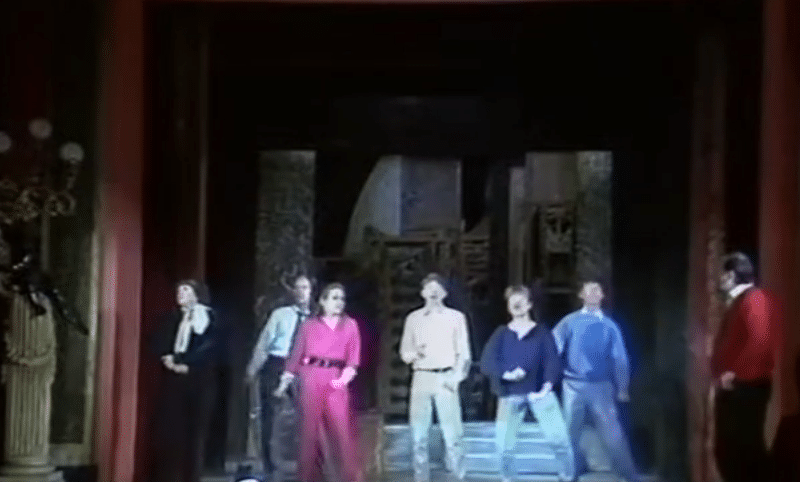
There were more than 300 smaller venues and 78 large music halls in London alone by the middle of the Victorian era. Little Tich, Dan Leno, and Marie Lloyd all rose to prominence as performers. Songs from the music hall stage found their way into everyday conversation, into the First World War trenches, and into nursery rhymes that are still only vaguely remembered today. Whether people realize it or not, the phrase “Up and down the City Road, in and out The Eagle” alludes to one of the first saloon entertainment venues.
When the decline did occur, it wasn’t abrupt. It came in phases, each of which at the time appeared to be an essential modernization. Restrictions on licensing were tightened. The looser social arrangements and promenades that had given the halls an air of complete vitality and slight disrepute were opposed by the London County Council.
The first Royal Variety Performance was presented to King George V in 1912, a legitimization that may have shown how much territory had already been lost. The biggest celebrity of the time, Marie Lloyd, was not invited. Too sultry. The halls were evolving into something different as they gained respect.
Jazz and swing started drawing audiences in different directions after World War I. A generation of performers who had built their acts around the unique atmosphere of the old music hall the drinking, the singing-along, the sense of shared rowdiness were unable to make the transition when the halls were rebranded as variety theaters. Looking back, it seems as though the form was hollowed out from the inside rather than destroyed, with the name remaining while the substance vanished.
The Working Men’s Club filled that void. It’s worth stopping to consider how quietly this occurred. Throughout the second half of the nineteenth century, these locally owned, membership-based clubs that were dispersed throughout the industrial towns of the north and midlands had always provided entertainment.
The clubs increasingly became the places where that older custom persisted as the music halls declined. A comedian who had previously performed for the Shoreditch Empire now performed for Bradford or Barnsley, alternating between last orders and bingo. To fit the space, the format was altered. Perhaps the spirit didn’t.
It remains to be seen if that spirit was completely preserved. The 1907 Music Hall Strike, which saw performers and stagehands walk out against the theater syndicates, was led by Keir Hardie and Ben Tillett and supported by celebrities like Marie Lloyd, who made enough money to be comfortable but still chose solidarity.
At its height, music hall had a genuine ambivalence about class and authority. The working men’s club had its own hierarchies and politics. It’s still unclear if the original form’s subversive energy or just its external form survived.
The fact that something survived is less questionable. You could find something familiar to a Victorian music hall audience on any given Friday night in a working men’s club in the north of England, well into the twentieth century and in some places beyond: a singer, a comedian, a room full of people who had paid a small fee to be entertained together, drinks in hand. In 1852, the Canterbury Music Hall opened. In 1942, the building was destroyed during the Blitz. It was much more difficult to kill what it stood for.
FAQs
Q: What were music halls?
A: Purpose-built Victorian venues combining drinking, comedy, and song for working people.
Q: Why did music halls decline?
A: Licensing restrictions, council opposition, and competition from jazz gradually hollowed them out.
Q: Who was Charles Morton?
A: He opened the Canterbury in 1852 and earned the title “Father of the Halls.”
Q: What replaced music halls?
A: Working men’s clubs absorbed the tradition, hosting comedians between bingo and last orders.
Q: What happened to the Canterbury Music Hall?
A: The building was destroyed during the Blitz in 1942.