
Close Menu
Paul Corin MusicPaul Corin Music
    Facebook X (Twitter) Instagram
    Saturday, October 10
    Facebook X (Twitter) Instagram
    Paul Corin MusicPaul Corin Music
    Subscribe
    • Wurlitzer Organs
    • Magnificent Music Machines
    • News
    • Music Stars
    • Terms of Service
    • Privacy Policy
    • Disclaimer
    • About Us
    Paul Corin MusicPaul Corin Music
    Home » Britain’s Oldest Wurlitzer Organ: The Walsall Picture House Instrument and Where It Lives Today
    Musical Instruments

    Britain’s Oldest Wurlitzer Organ: The Walsall Picture House Instrument and Where It Lives Today

    By Alison JamesSeptember 16, 2026No Comments4 Mins Read
    Facebook Twitter Pinterest LinkedIn Tumblr Email
    Share
    Facebook Twitter LinkedIn Pinterest Email

    A crate containing what would turn out to be a tiny but significant piece of British musical history arrived at Southampton Docks on a chilly December day in 1924. The Wurlitzer Opus 956, a small, two-manual, six-rank Style-D pipe organ, was constructed at the company’s North Tonawanda, New York, factory and transported across the Atlantic to the Picture House in Walsall, Staffordshire. It wasn’t a big show. A provincial theater eager to add something unique to its silent film schedule made the sensible purchase. Nevertheless, this instrument is still in use a century later.

    Even those who were only present for the movie must have felt the significance of that January 26, 1925, opening night. In what was a true first for the nation—London wouldn’t get its own Wurlitzer theater organ for another three months—organist Jack Courtnay performed live accompaniment to the British silent adventure film Claude Duval. Even though most people at the time probably didn’t fully comprehend what they were witnessing, it is a source of pride for a mid-sized Midlands town to claim that distinction ahead of the capital.
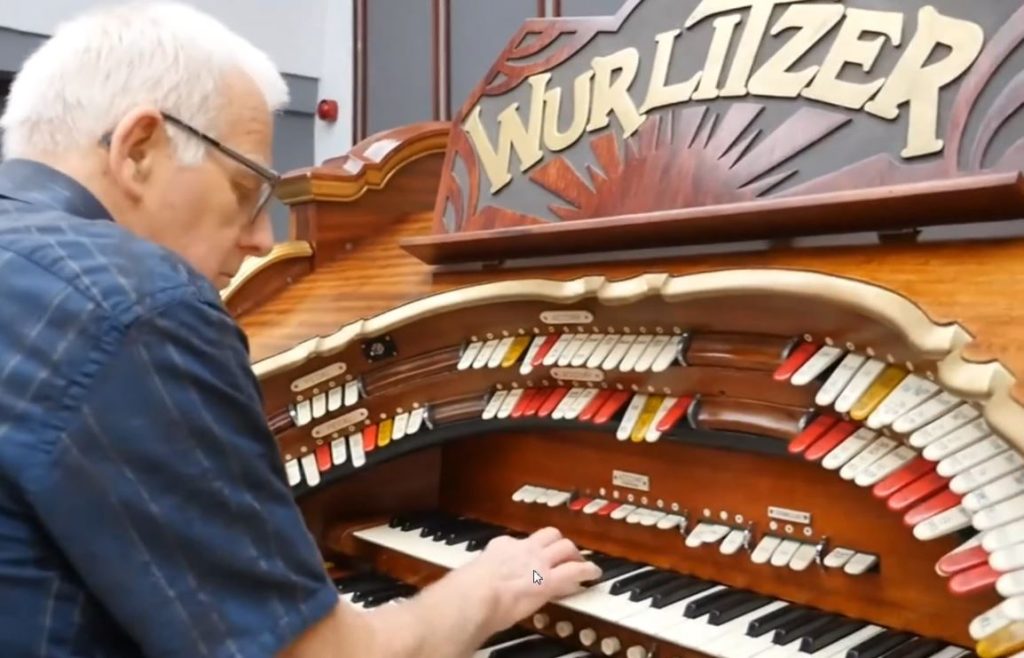
    Wurlitzer Organ Credit John Kerruish
    Wurlitzer Organ Credit John Kerruish

    Throughout some challenging years, the organ faithfully served the Picture House. Wilfred Gregory, a resident organist, is said to have used the Wurlitzer as a kind of community anchor during World War II, performing for audiences who were dealing with the anxieties of the conflict. Although it’s a minor detail that is easily missed, it illustrates how important these instruments were to daily life in ways that have since mostly vanished. There was more to a cinema organ than just amusement. For a short while, the entire community could unite around this shared emotional experience.

    By 1955, the organ was no longer needed in theaters because movies were now coming with their own soundtracks. Allan Hickling, a local council member and organ enthusiast, purchased it and installed it in his Sedgley home, Dormston House. It appears that the instrument had a fairly active private life for a few years, performed by “many notable organists of the day,” according to one account, though the details of those organists’ identities and performances have been lost to time. The Walsall Wurlitzer moved on again after Hickling finally decided he wanted something with greater range.

    The organ was bought by Arthur Thorn of Beer, East Devon, in 1957, and it has been in the village’s Congregational Church on Fore Street ever since. Upon arrival, a few changes were made: the second-touch mechanisms, novelty effects, and percussion section were eliminated because they weren’t appropriate for a church. Even though there is something a little depressing about a theater organ losing its more theatrical characteristics, you can see the logic.

    The comedic moments and chase scenes were no longer emphasized by the toy counter and drum effects. What was left was a more subdued version of the original Wurlitzer, which was still capable of producing a rich, warm, and distinctive sound.

    Between the late 1980s and 2008, the organ fell into disrepair, which nearly put an end to the narrative. However, a restoration effort gained traction, and since their official founding in September 2009, the Friends of Beer Wurlitzer have raised and, according to their own account, spent “thousands upon thousands of pounds” on upgrades and repairs. Professional organists from all over the nation attend the group’s eight fundraising concerts each year; many of them travel great distances to sit at the console of Britain’s oldest surviving Wurlitzer theater organ.

    It’s worth taking a moment to consider that fact. An instrument of true national significance is housed in the Congregational Church in Beer, an East Devon fishing village with a population in the low hundreds. Performances begin at 2:00 PM. Intermittent refreshments are included with admission. There’s something subtly lovely about that: tea and biscuits at halftime, the oldest Wurlitzer in Britain, held in a tiny church by the sea. That may be precisely how things ought to be.

    Oldest Wurlitzer Organ
    Share. Facebook Twitter Pinterest LinkedIn Tumblr Email
    Alison James
    • Website

    Alison James writes about the history of mechanical music in Britain, including polyphons, Wurlitzer theater organs, fairground organs, and the strange collections that kept them in operation. She has traveled throughout the South West for years, visiting museums, village halls, and restoration workshops. She is especially drawn to those who save instruments that no one else wanted. She discusses the site's history, including the organs, the movie theaters for which they were constructed, and the lengthy history of British music prior to the invention of charts.

    Related Posts

    The Paper That Played Rachmaninov – What Piano Rolls Are Actually Made Of

    October 7, 2026

    The Difference Between a Pianola, a Player Piano, and a Reproducing Piano

    October 6, 2026

    What Is an Ampico Piano Roll and How Did It Capture a Pianist’s Exact Touch?

    October 5, 2026

    Comments are closed.

    Music and History

    How to Restore a Player Piano – What It Takes, What It Costs, and What Can Go Wrong

    By Karl Shane KarlOctober 7, 20260

    A player piano that hasn’t moved in decades has an almost eerie quality. The roll…

    The Paper That Played Rachmaninov – What Piano Rolls Are Actually Made Of

    October 7, 2026

    The Difference Between a Pianola, a Player Piano, and a Reproducing Piano

    October 6, 2026

    How Player Piano Rolls Were Made – The Factory Process Nobody Talks About

    October 6, 2026

    Rachmaninov on Paper – The Piano Rolls That Preserved a Legend’s Hands

    October 5, 2026

    What Is an Ampico Piano Roll and How Did It Capture a Pianist’s Exact Touch?

    October 5, 2026

    Surviving Wurlitzer Organs You Can Still Hear Live in the UK Today

    September 29, 2026

    The Compton Organ vs the Wurlitzer – Britain’s Two Great Cinema Organ Rivals

    September 29, 2026

    Silent Films and the Organ – How Cinema Musicians Became Stars Before Sound

    September 29, 2026

    693 Organ Pipes – Inside the Mechanical Marvel That Is a Wurlitzer Theatre Organ

    September 28, 2026

    The BBC Theatre Organ – From Blackpool’s Empress Ballroom to the BBC Playhouse Manchester

    September 28, 2026

    How Cinema Organs Were Shipped From America to Britain in the 1920s

    September 28, 2026

    What Happened to Britain’s Cinema Organs When the Picture Houses Closed?

    September 22, 2026

    Reginald Dixon and the Tower Ballroom Blackpool: How One Organist Created the Blackpool Sound

    September 22, 2026

    The Regent Cinema Brighton’s Wurlitzer Organ: Where Is Opus 2046 Now?

    September 18, 2026

    The Trocadero Elephant and Castle Wurlitzer: Britain’s Largest Cinema Organ Ever Installed

    September 18, 2026

    Paul Corin Music is an independent music blog rooted in the rich heritage of British musical history. Born from the legacy of Paul Corin's Magnificent Music Machines — the world-famous mechanical music museum at Lametton Mill, St Keyne, Cornwall — this site covers everything from Wurlitzer theatre organs and Victorian music halls to contemporary pop stars and today's biggest music news.

    Useful Links
    • About Us
    • Contact Us
    • Disclaimer
    • Home
    • Privacy Policy
    • Terms of Service

    From the Mill

    Paul Corin's Magnificent Music Machines
    Lametton Mill, St Keyne, Cornwall
    1967 – 2012

    Read the mechanical music archive
    Facebook X (Twitter) Instagram Pinterest
    • Home
    • Wurlitzer Organs
    • Regent Cinema Brighton
    • Musical Heritage Attraction
    • Musical Instruments
    • Magnificent Music Machines
    • Entertainment
    • Music Stars
    © 2026 ThemeSphere. Designed by ThemeSphere.

    Type above and press Enter to search. Press Esc to cancel.