
Amy Winehouse’s 2003 debut album “Frank” has a scene early on where her voice stops you cold. Pop singers don’t bend notes the way jazz singers do. It’s not rushed. thoughtful. Like someone who has sat in rooms where music was not considered a commercial product but rather a serious discipline.
It’s simple to overlook, particularly now that “Back to Black” has such a lasting impact on everything that came before it. As many have pointed out, that debut album was the only jazz record she ever produced knowing what it meant says a lot about how “Back to Black” came to be.
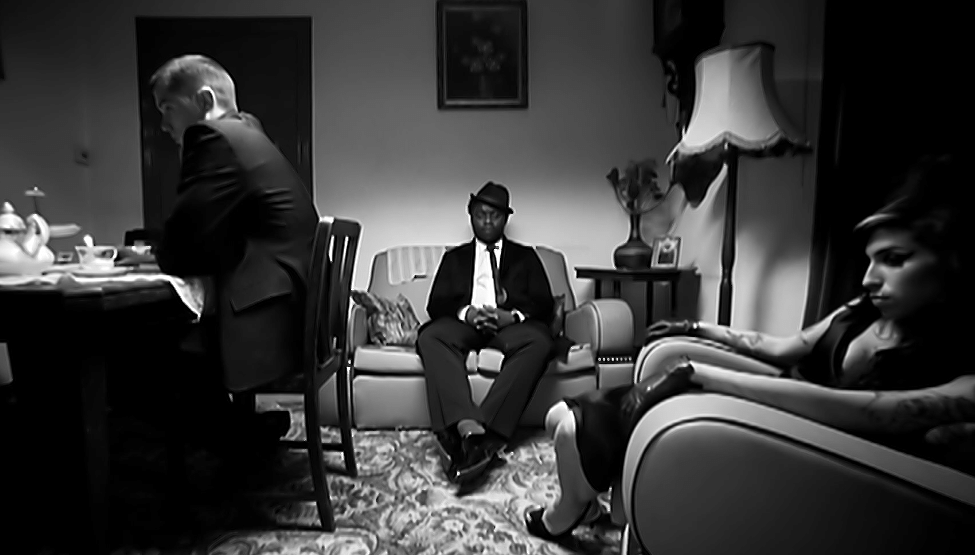
The National Youth Jazz Orchestra introduced Winehouse to music, a detail that is often overlooked in favor of the beehive, eyeliner mythology. A teenage girl was learning to live up to a tradition that most of her peers couldn’t identify before the Grammys and the tabloid circus.
You don’t just happen upon jazz. It requires a certain amount of patience and a readiness to listen to and take seriously records that are older than your parents. She obviously did. Her favorite cover versions of Sam Cooke, The Shirelles, Thelonious Monk, and Billie Holiday weren’t chosen for commercial placement.
They were the decisions made by the person who had listened. When she was twenty years old, “Frank” came out. It’s not quite accurate to say that it’s the lighter Winehouse record. There is a difference; it’s the most knowledgeable about jazz.
Most pop songwriters don’t try to play with irony and moral ambiguity until much later in their careers, if at all. The writing on that album is formally quite sophisticated. It wasn’t a marketing ploy to win her the Ivor Novello Award for songwriting and composition. Something in the craft was recognized by that group of people.
“Back to Black” transformed that compositional seriousness into something more emotionally immediate, which is where jazz education becomes crucial. The muscular, slightly dusty vibe of the record came from Mark Ronson and producer Salaam Remi surrounding her with Sharon Jones’ band, The Dap-Kings.
Underneath, though, the architecture remained hers. “Love Is a Losing Game” lines the resolution. The title track’s beat. Someone who learned music from a karaoke machine wouldn’t have these instincts. These are the gut feelings of someone who has been taught, albeit in an unusual way, to consider the true purpose of a song.
Laura Mvula’s statement that “Frank” raised her and symbolized the emergence of a neo-soul sensibility with a distinct identity in Britain is worth considering. That framing is important. Winehouse was not merely appropriating Black American musical traditions; rather, she was deeply and seemingly reverently educated in them.
She covered Sam Cooke and Billie Holiday as part of an ongoing conversation about music that she believed to be significant rather than as novelties. It’s another matter entirely whether or not that conversation was always conducted flawlessly. It’s evident that it was done with seriousness.
The Sylvia Young Theater School connection is typically presented as a humorous tale about her expulsion, but it also alludes to the type of artist she was developing into. According to her own explanation, stage school wasn’t a factory for pop stars.
It encouraged students to work and sparked their creativity. She went through it and moved on, which seems perfectly appropriate for someone who was never going to fit neatly into any one genre. The orchestra of jazz. The theater school. The seventeen-year-old early signing to management. She left something behind; each institution left something in her.
This year marked the 20th anniversary of “Back to Black”; the audience is still, in some ways, catching up to what it truly was. It is difficult to see clearly because of the cultural narrative surrounding Winehouse: the addiction, the tabloids, the tragic end.
The album itself is accurate. The arrangements are exact. The singing is controlled and technically remarkable; it is not the desperate expression of someone breaking down. There was some source of that control. It originated from a young woman who, before anyone noticed, had dedicated years of her life to the study of music. We may have been the most negligent in that section of the narrative.
FAQs
1. What made Amy Winehouse’s musical education unusual for a pop artist?
She trained with the National Youth Jazz Orchestra as a teenager.
2. What does “Frank” reveal about Winehouse’s musical knowledge?
It’s the most jazz-literate album she ever made.
3. Who shaped the sound of “Back to Black”?
Mark Ronson and Salaam Remi brought in Sharon Jones’ band, The Dap-Kings.
4. What award recognised the songwriting craft on “Frank”?
She won the Ivor Novello Award for songwriting and composition.
5. Why is the cultural narrative around Winehouse considered incomplete?
It overshadows the serious musical discipline behind her work.