
Close Menu
Paul Corin MusicPaul Corin Music
    Facebook X (Twitter) Instagram
    Tuesday, November 24
    Facebook X (Twitter) Instagram
    Paul Corin MusicPaul Corin Music
    Subscribe
    • Wurlitzer Organs
    • Magnificent Music Machines
    • News
    • Music Stars
    • Terms of Service
    • Privacy Policy
    • Disclaimer
    • About Us
    Paul Corin MusicPaul Corin Music
    Home » Elton John’s Music Hall DNA – How Victorian Entertainment Shaped Britain’s Greatest Showman
    Musical Instruments

    Elton John’s Music Hall DNA – How Victorian Entertainment Shaped Britain’s Greatest Showman

    By Karl Shane KarlNovember 10, 2026No Comments4 Mins Read
    Facebook Twitter Pinterest LinkedIn Tumblr Email
    Share
    Facebook Twitter LinkedIn Pinterest Email

    Almost every Elton John performance has a pause before the piano starts, a nearly architectural costume choice that gives you the impression that something older than rock and roll is at work. Not exactly nostalgia. Something structural. It’s as though the instincts behind the spectacle were taken from a tradition that existed at least a century before the man.

    Theatrical excess disguised as popular entertainment has always been a special talent in Britain. The nation had mastered the art of providing regular working people with an exceptional night out long before Elton John was born in a Pinner council house in 1947.
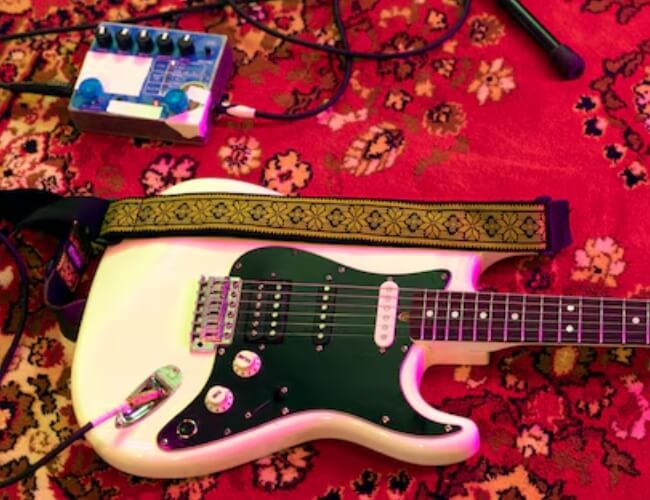
    Elton Johns Music Hall Dna How Victorian Entertainment Shaped Britains Greatest Showman

    That promise was the foundation of the smoky, boisterous, truly democratic Victorian music hall. Performing for audiences who had paid a few pennies to forget their week, comedians, singers, acrobats, and magicians all shared the same bill. That formula never truly vanished, so it’s worth pondering for a while. It just switched locations.

    Compared to other cultures, British culture has always been more adept at absorbing and remixing its own history. This is evident from the reference material: the same theatrical culture that gave rise to sentimental music, created Gilbert and Sullivan’s comic operas, attracted large audiences to fair-booth performances, and eventually contributed to the twentieth-century popular entertainment tradition.

    The lineage is convoluted, spanning the Edwardian era, music hall revivals, wartime variety shows, and, most likely, the glam rock of the early 1970s. Theatricality in British pop music was not created by Elton John. It was inherited by him.

    What he did was figure out how to scale it on instinct. The platform boots, plumed hats, and oversized glasses were more than just fashion choices; they were a form of communication. Costume was always a component of grammar in the music hall tradition.

    Performers used visual exaggeration to signal to the cheap seats that something significant was happening on stage. Dan Leno played dames in outrageous wigs. Elton John used the same reasoning in arenas that could accommodate 70,000 people. Watching video from his early 1970s tours makes it difficult to ignore how effortlessly the spectacle translates. The scale has changed, but the mechanics are Victorian.

    There is a noteworthy aspect of class: British music halls were originally a working-class culture that was creating its own vocabulary; they were never an elite form of entertainment. Elton John was a modest suburban kid from Middlesex who attended the Royal Academy of Music on a junior scholarship before making his way to Tin Pan Alley and ultimately to something much bigger.

    More than most people realize, that social arc is a reflection of the music hall tradition. There were no aristocrats among the great music hall performers. They were regular people who had mastered the art of packing a room.

    A remarkable number of performers with this particular quality, a talent for grand gestures that somehow avoids pretension, have come from Britain. The UK’s cultural self-description as a sort of entertainment superpower is based on a long, accumulated tradition of popular performance rather than being empty boasting. Part of it was figured out by the Beatles.

    In a different register, David Bowie did the same. However, Elton John appears to have embraced every aspect of Victorian culture, including sentimentality, showmanship, and the willingness to be fully and unapologetically visible. It is probably impossible to determine whether that is something ingrained through cultural osmosis or conscious inheritance. Perhaps both.

    The fact that the British stage, in all its manifestations and throughout all of its centuries, has continuously produced performers who recognize that entertainment is a contract with an audience seems more obvious. They pay attention to you because you put on a show for them. For fifty years in a row, Elton John upheld that agreement. The music hall has long since closed. It turned out that its DNA was much more resilient.

    FAQs

    1. What tradition does Elton John’s theatrical style descend from?
      Victorian music hall performance culture.
    2. Why did music hall performers use visual exaggeration?
      To signal significance to audience members in the cheap seats.
    3. What was the class background of most music hall performers?
      They were ordinary working people, never aristocrats.
    4. How does Elton John’s social origins connect to that tradition?
      Like music hall stars, he rose from modest suburban roots.
    5. What is the core contract between a British entertainer and their audience?
      You perform spectacularly; they give you their attention.
    Elton John's Music Hall DNA
    Share. Facebook Twitter Pinterest LinkedIn Tumblr Email
    Karl Shane Karl
    • Website

    Karl Shane Karl covers the modern side of the story — pop and rock artists, chart movements, tours, and the music news worth paying attention to. He takes the stance that while the machinery has evolved, the process of drawing an audience has not, and he writes artist biographies that situate today's performers in a longer lineage. He is in charge of the Trending, Music Stars, and News sections.

    Related Posts

    Why Britain Fell in Love With the Piano in the Victorian Era

    November 5, 2026

    The Mortier Organ – Why Antwerp’s Most Eccentric Instrument Conquered European Dance Halls

    October 14, 2026

    The Polyphon Music Box – Victorian Britain’s Answer to the Jukebox

    October 13, 2026

    Comments are closed.

    All

    Cody Johnson CMA Awards Withdrawal: Country Star Cites Mental and Physical Exhaustion

    By Karl Shane KarlNovember 20, 20260

    On certain nites in Nashville, everything comes together the nominations, the shows, the thunderous crowd…

    Ella Langley Sweeps the 2026 CMA Awards – Here’s Every Award She Won

    November 20, 2026

    Lainey Wilson 2026 CMA Awards Outfit: The Butter Yellow Oscar de la Renta Gown That Stole the Show

    November 20, 2026

    Did Larry Poindexter’s Net Worth Reflect His Range? Character Actor, Country Singer, Casting Director

    November 20, 2026

    The Voice Behind “Elvira”: Remembering Richard Sterban, the Man Who Made Country Music Rumble

    November 20, 2026

    How the British Music Hall Influenced Elvis Presley the Beatles and Modern Pop

    November 11, 2026

    Coldplay and the Cathedral Organ – How Chris Martin’s Classical Training Shapes Their Sound

    November 11, 2026

    Elton John’s Music Hall DNA – How Victorian Entertainment Shaped Britain’s Greatest Showman

    November 10, 2026

    Why Sam Smith Sounds Like No One Else – The Gospel Church Tradition Behind Their Voice

    November 10, 2026

    Amy Winehouse’s Jazz Education – The Forgotten Musical Heritage Behind Back to Black

    November 10, 2026

    Ed Sheeran and the Troubadour Tradition – Why Britain’s Biggest Pop Star Is More Medieval Than Modern

    November 6, 2026

    Adele’s Classical Roots – How a Council Estate Singer Built Her Voice on Gospel and Soul Tradition

    November 6, 2026

    The Barrel Organ Street Musician – A Lost Soundtrack of Victorian London

    November 5, 2026

    Why Britain Fell in Love With the Piano in the Victorian Era

    November 5, 2026

    The Instrument That Inspired a Thousand Songs – A Social History of the British Piano

    November 5, 2026

    How the Savoy Theatre Changed British Theatre Forever

    November 3, 2026

    Paul Corin Music is an independent music blog rooted in the rich heritage of British musical history. Born from the legacy of Paul Corin's Magnificent Music Machines — the world-famous mechanical music museum at Lametton Mill, St Keyne, Cornwall — this site covers everything from Wurlitzer theatre organs and Victorian music halls to contemporary pop stars and today's biggest music news.

    Useful Links
    • About Us
    • Contact Us
    • Disclaimer
    • Home
    • Privacy Policy
    • Terms of Service

    From the Mill

    Paul Corin's Magnificent Music Machines
    Lametton Mill, St Keyne, Cornwall
    1967 – 2012

    Read the mechanical music archive
    Facebook X (Twitter) Instagram Pinterest
    • Home
    • Wurlitzer Organs
    • Regent Cinema Brighton
    • Musical Heritage Attraction
    • Musical Instruments
    • Magnificent Music Machines
    • Entertainment
    • Music Stars
    © 2026 ThemeSphere. Designed by ThemeSphere.

    Type above and press Enter to search. Press Esc to cancel.